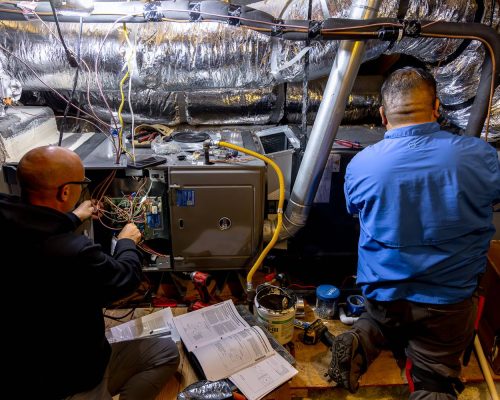
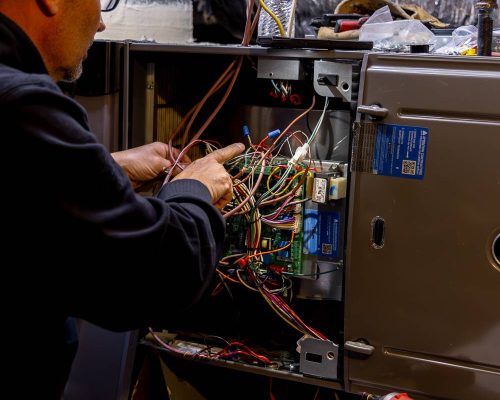
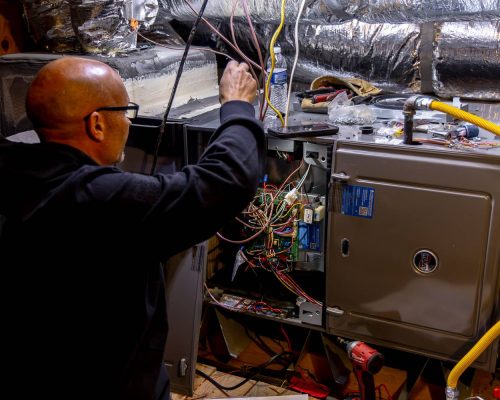
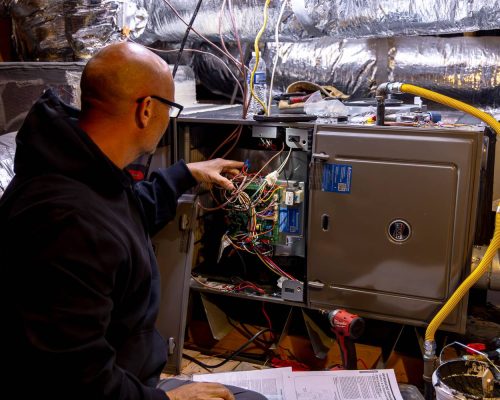
A furnace keeps your home warm during the winter and also plays a critical role in the operation of your air conditioning system. Furnaces produce heat through the combustion of natural gas or propane in the furnace’s burner. The heat created in this process passes through a heat exchanger.
Air from your home’s return ducts is blown across the heat exchanger, warming the air. The furnace’s blower then pushes the heated air into the ductwork, which distributes it throughout the home.
During the warmer months, the blower inside the furnace continues to circulate air throughout the home. Instead of being heated, the air is cooled as it passes over the evaporator coil, which is connected to the home’s split-system air conditioner. The evaporator coil is typically installed downflow of the furnace as part of the indoor cooling system.
The blower portion of the furnace plays a vital role in the operation and efficiency of the HVAC system year-round. That’s why it’s important to ensure it is operating correctly and properly matched with the rest of the system to provide maximum efficiency.